
Call for Companies: Design for Startups Fall 2026 Cohort

The Shumka Centre for Creative Entrepreneurship at Emily Carr University of Art + Design invites applications from Canadian companies pursuing design-driven development, including early-stage ventures and established SMEs, to participate in the Fall 2026 cohort of Design for Startups. This 12-week hybrid program runs from September 17 – December 10, 2026, and is funded by the National Research Council of Canada’s Industrial Research Assistance Program (NRC-IRAP).
What Could Design Unlock for Your Business?
Design is more than how something looks. It helps companies better understand their users, identify opportunities for growth, improve products and services, communicate more effectively, and make more informed decisions. Good design drives growth: companies that excel at it see revenue growth 32% higher than their peers over a five-year period, according to McKinsey.
Through the Design for Startups (D4S) program, emerging startups and established SMEs are paired with highly skilled Emily Carr University student-designers for a 12-week engagement focused on solving real business challenges through design.
Program Snapshot
- Duration: 12 weeks
- Dates: September 17 – December 10, 2026
- Format: Virtual/Hybrid (Depending on location and availability)
- Design Support: One dedicated student-designer
- Cohort Size: 10 companies
- Company Contribution: $2,400 + GST
Areas of Design Expertise
Design for Startups helps companies explore challenges through research, testing, prototyping, and design-driven thinking.
| Whether you’re looking to: | Our student-designers bring expertise in: |
| Improve a customer experience | Interface design and usability testing |
| Validate a new idea | User research and profiling, prototyping and validation |
| Strengthen your brand | Visual identity development |
| Make sense of complex information | Data visualization |
| Better understand user needs | Ideation and concept selection |

Since 2013, 150+ Canadian Startups and SMEs Have Partnered with Design for Startups
D4S brings the transformative power of design to SMEs by connecting them with student-designers to produce deliverables that will have a measurable impact on their businesses, products, services, and platforms.
We were very satisfied with the Design for Startups program at Emily Carr. The collaboration brought real value to our product and the designer we worked with delivered thoughtful, high-quality work. We’d absolutely recommend the program to any startup with design needs.
– Paperplane Therapeutics, D4S Spring 2025 Cohort
How the Program Works
Over the course of 12-weeks, our student-designers follow a Double Diamond design and innovation process moving from discovery and problem definition through to solution development and delivery of design outcomes.
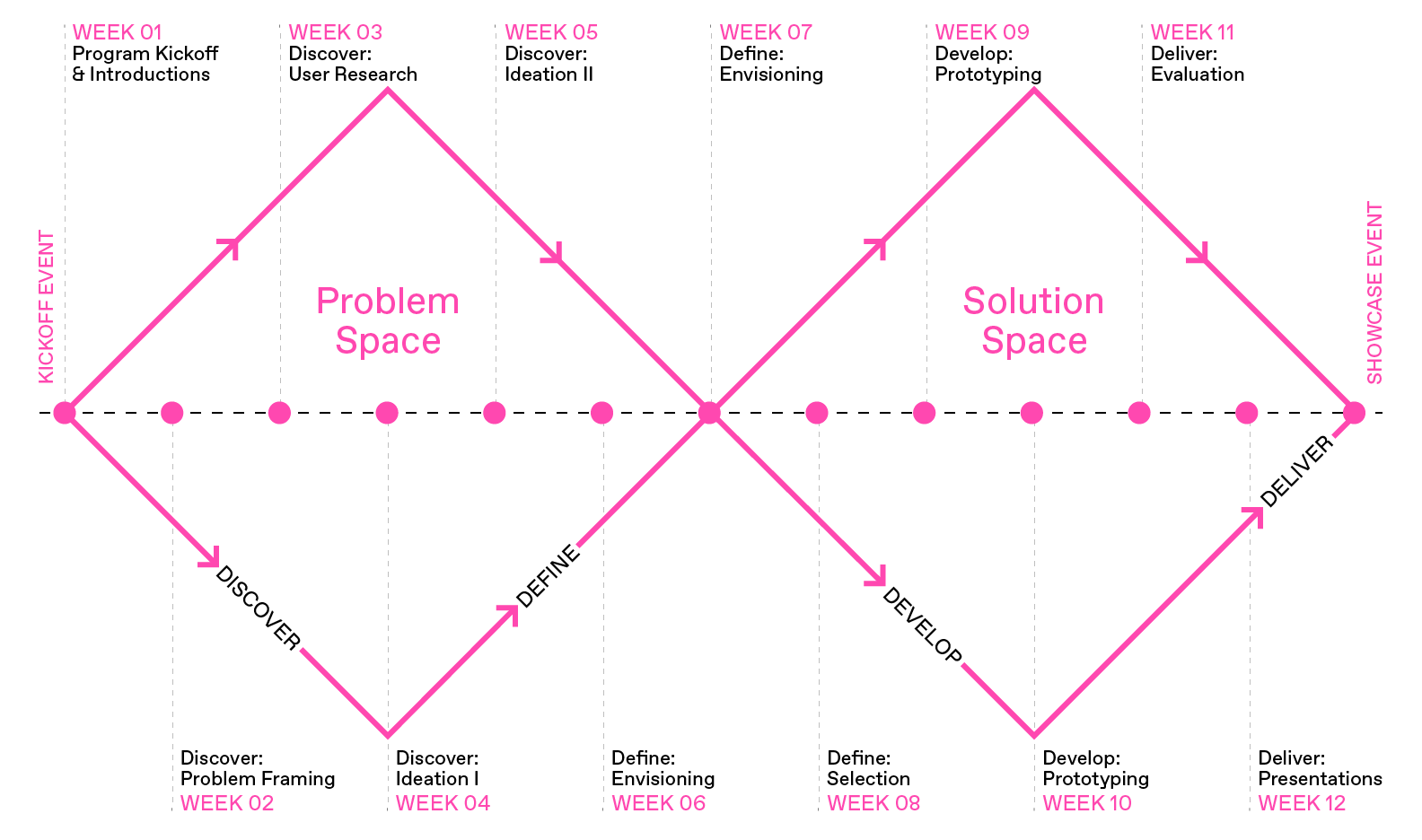
Problem Space
| Discover | Define |
The designer works with your team to understand your business, users, stakeholders, and design challenge. Activities may include:
| Research findings are synthesized into actionable insights and potential directions. Activities may include:
|
Solution Space
| Develop | Deliver |
The student-designer explores, prototypes, and tests potential solutions. Activities may include:
| The engagement concludes with:
|
Each Participating Company Receives:
- One dedicated student-designer
- Faculty-supported design process
- Research findings and insights
- Design concepts and recommendations
- Prototypes and testing outcomes (where applicable)
- Final presentation and project documentation
- Exposure to emerging design talent from Emily Carr University
Program Eligibility
Companies must be:
- Incorporated in Canada
- Work with an IRAP Industrial Technology Advisor (ITA)
The program is hybrid and open to companies across Canada; participation is not limited by region. Final eligibility is determined by NRC-IRAP and may include additional criteria beyond those listed here.
Next Intake: Fall 2026 Cohort (Sep 17 – Dec 10)
Extended deadline: July 30, 2026
What Types of Design Challenges Are a Good Fit?
Successful projects often begin with questions such as:
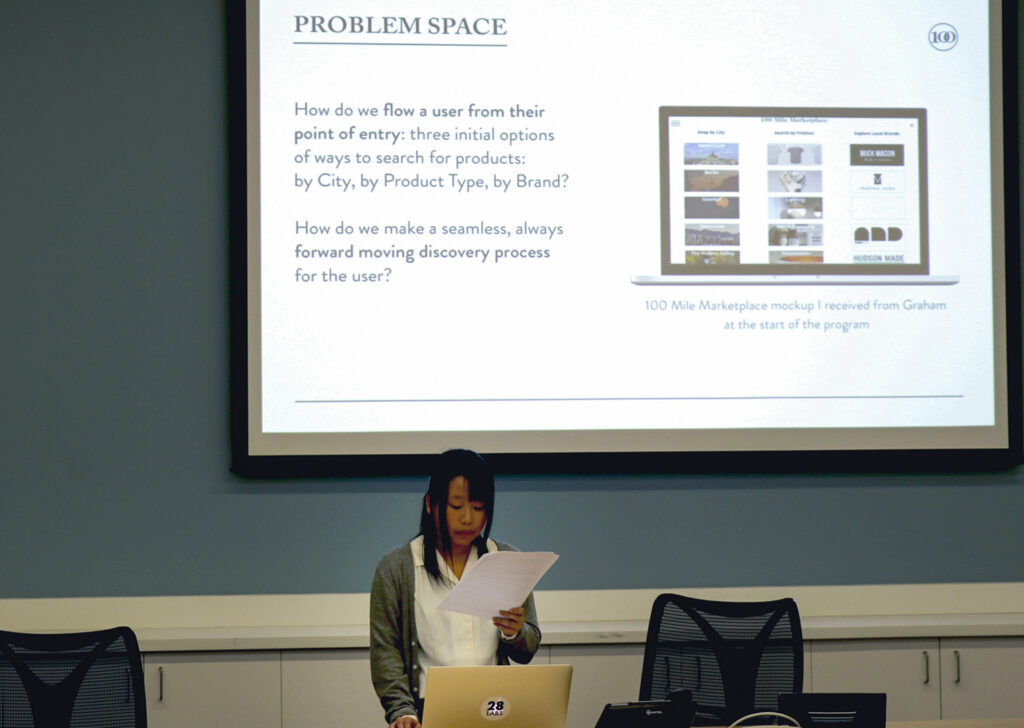
Understanding Users
|  |
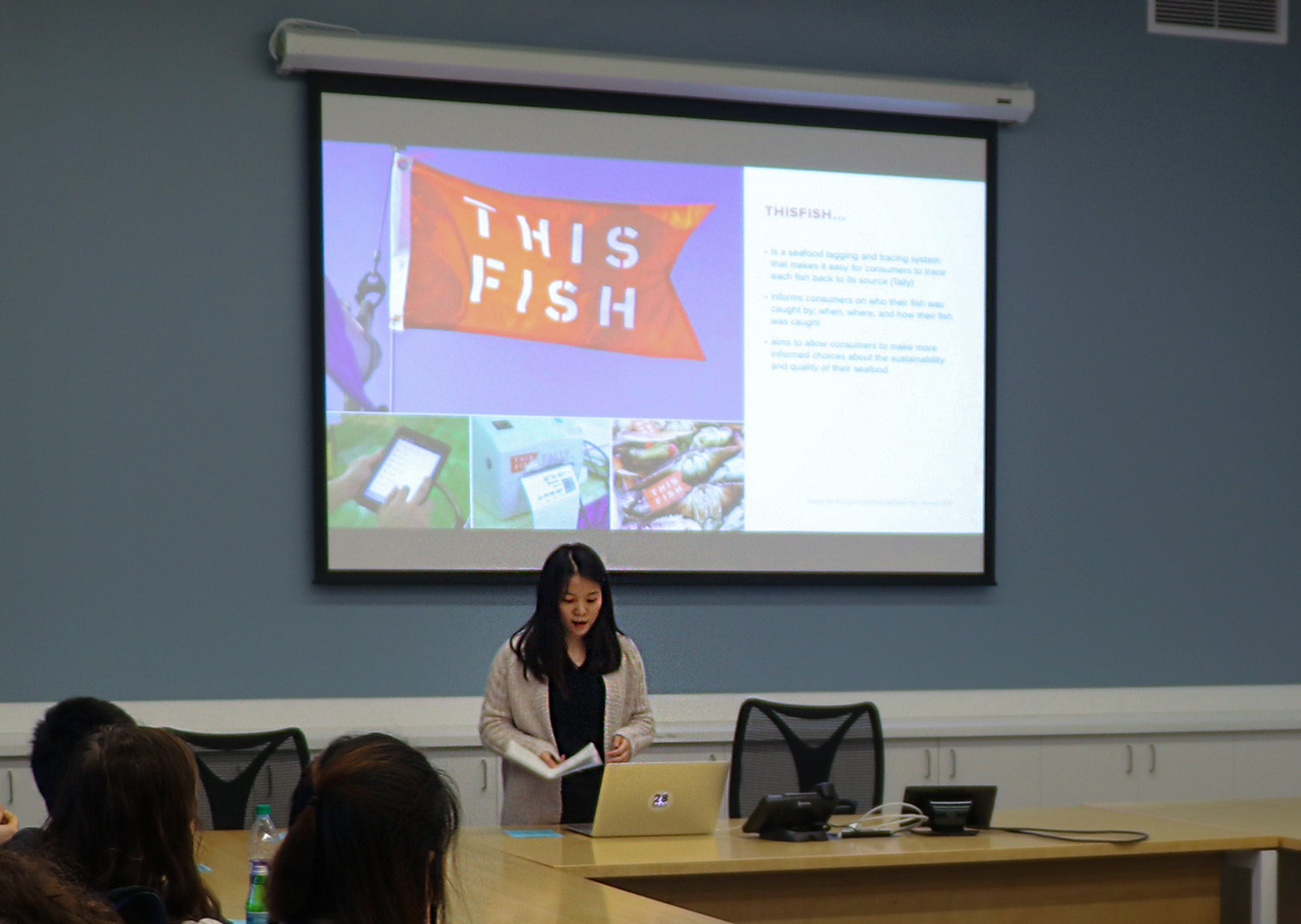 | Improving Products and Services
|
Exploring New Opportunities
|  |
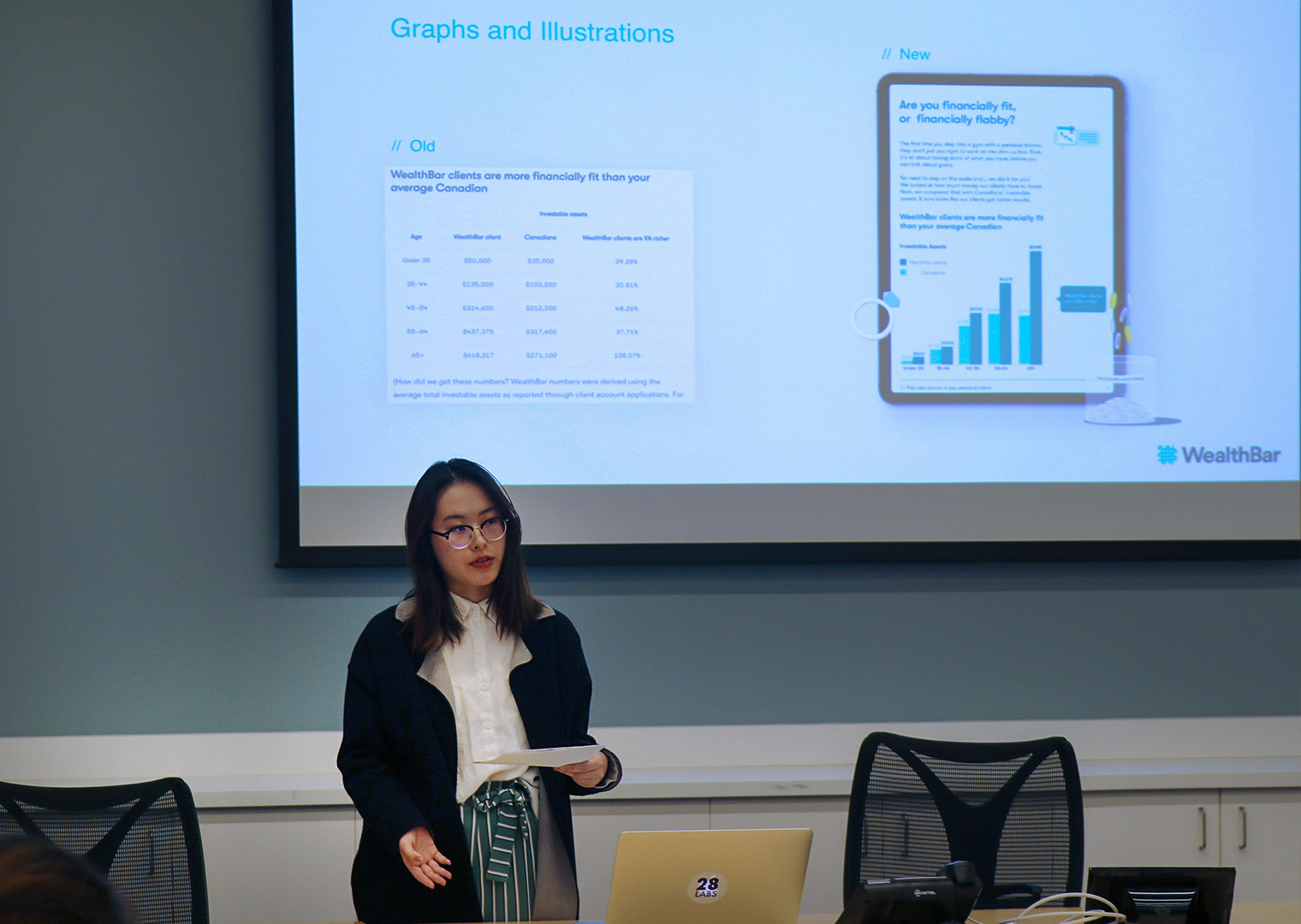 | Communicating More Effectively
|
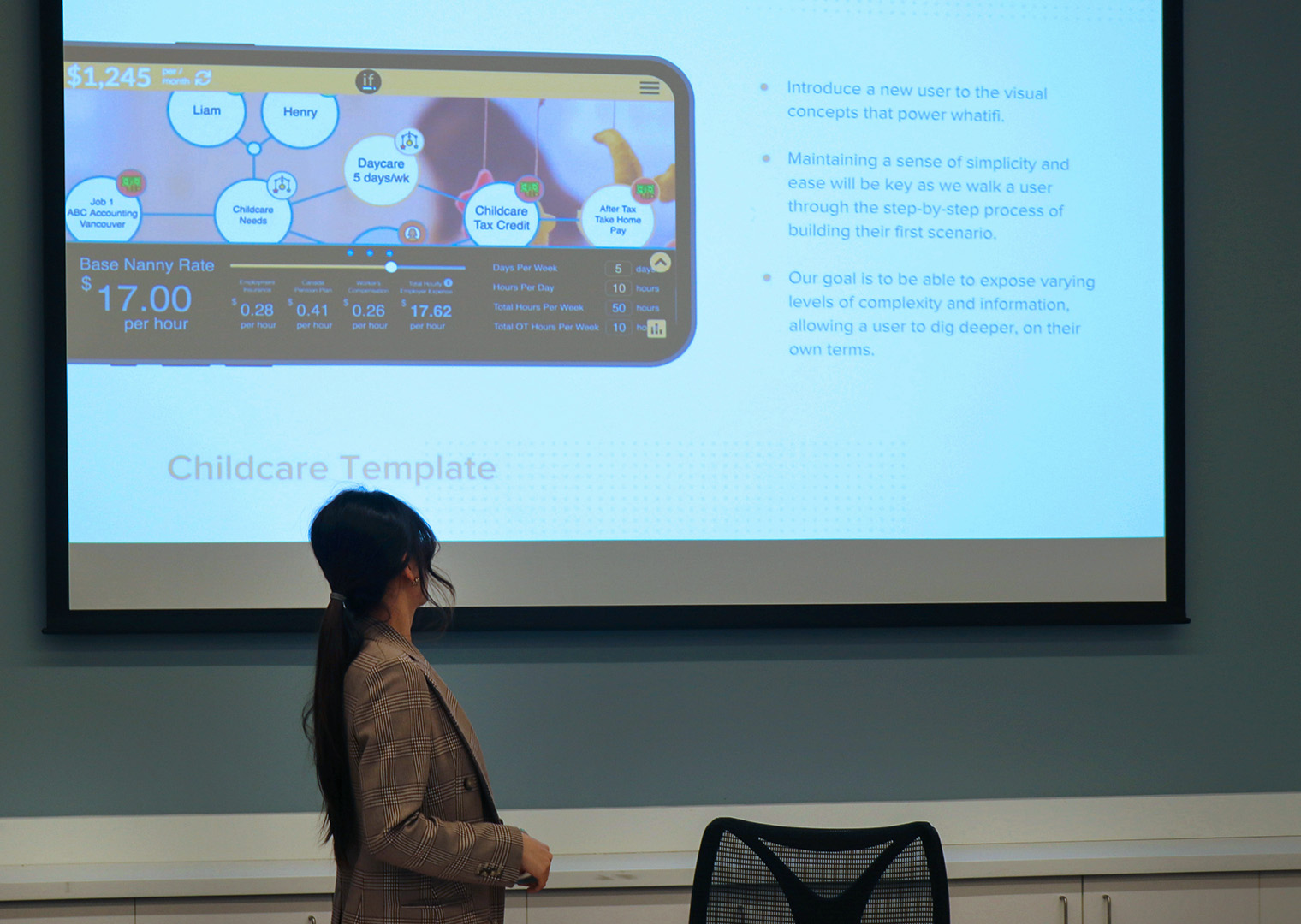
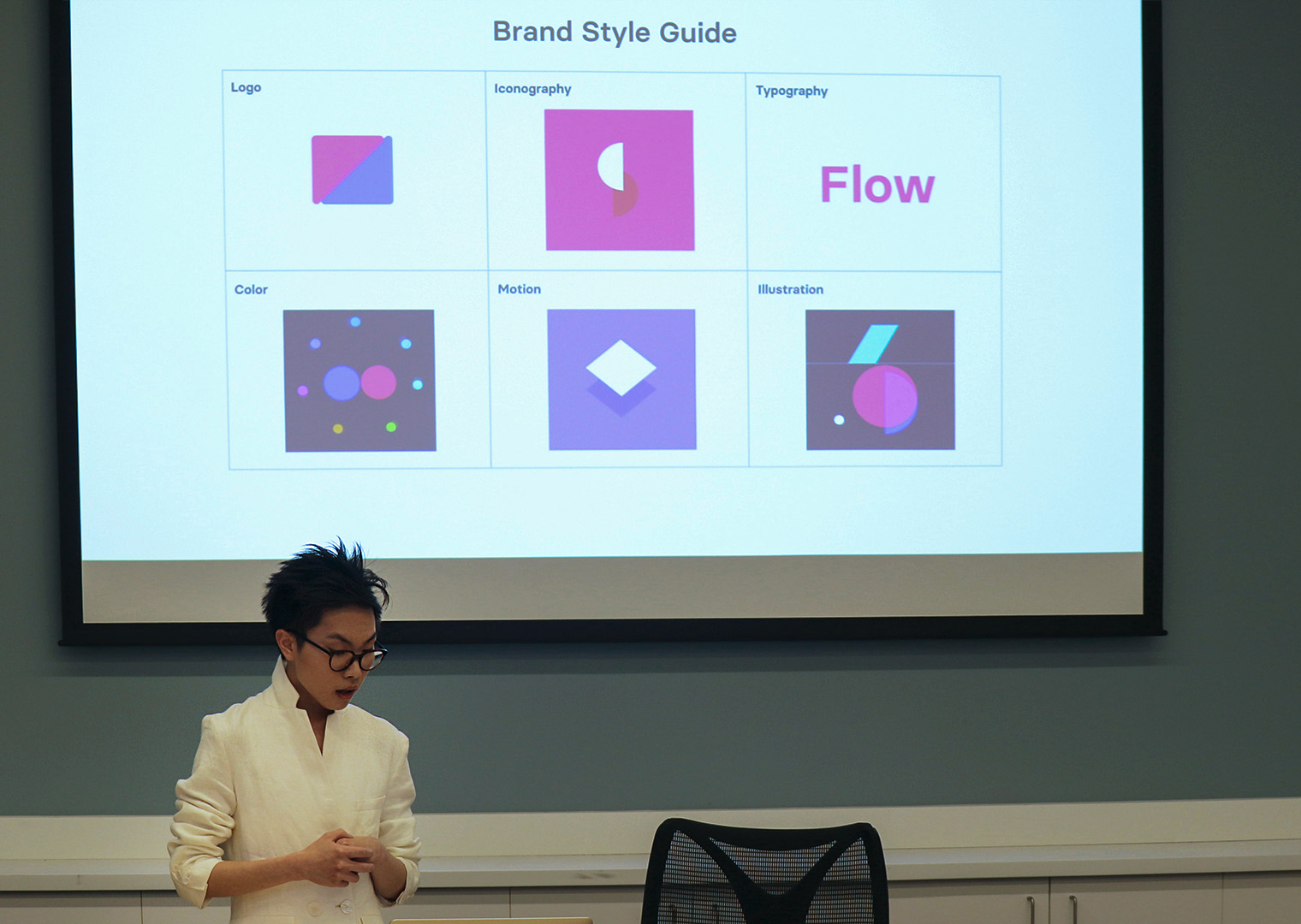
Making Sense of Complex Information
|  |
Recent Project Examples
Designing Better Healthcare Experiences with AI
Autochart.ai × Emily Qiang (BDes, 2026)
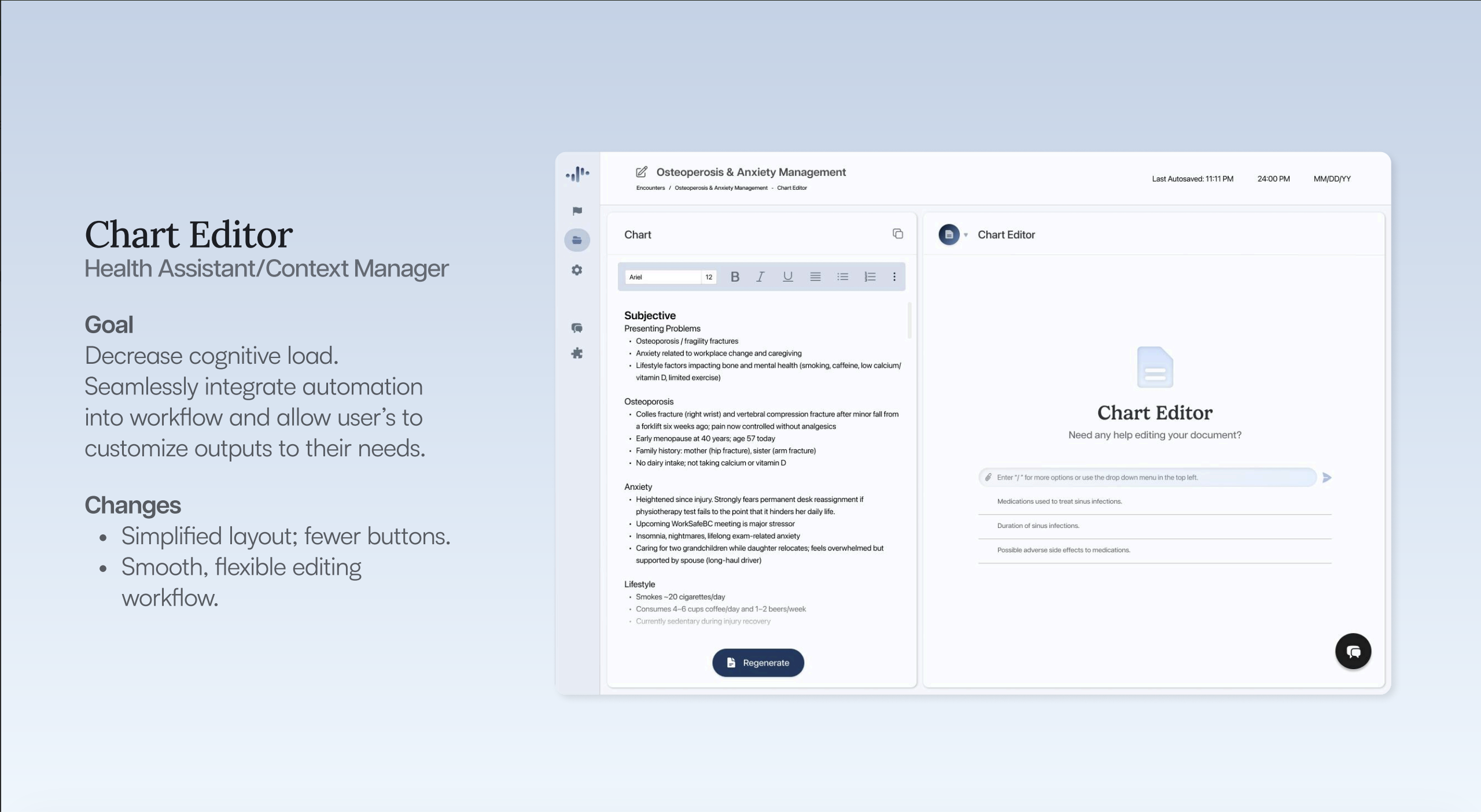
Autochart.ai develops AI-powered tools that help healthcare providers document appointments, generate clinical notes, referrals, and patient resources more efficiently. Emily worked directly with physicians and clinic staff to improve the user experience of Autochart.ai’s clinical documentation platform through user research, workflow analysis, prototyping, and usability testing, helping simplify complex healthcare workflows and improve the usability of AI-assisted tools.
Design Activities: User research, workflow mapping, interface design, prototyping, usability testing
Improving Digital Therapeutics Through User-Centred Design
Paperplane Therapeutics × Selina Kang (BDes, 2025)
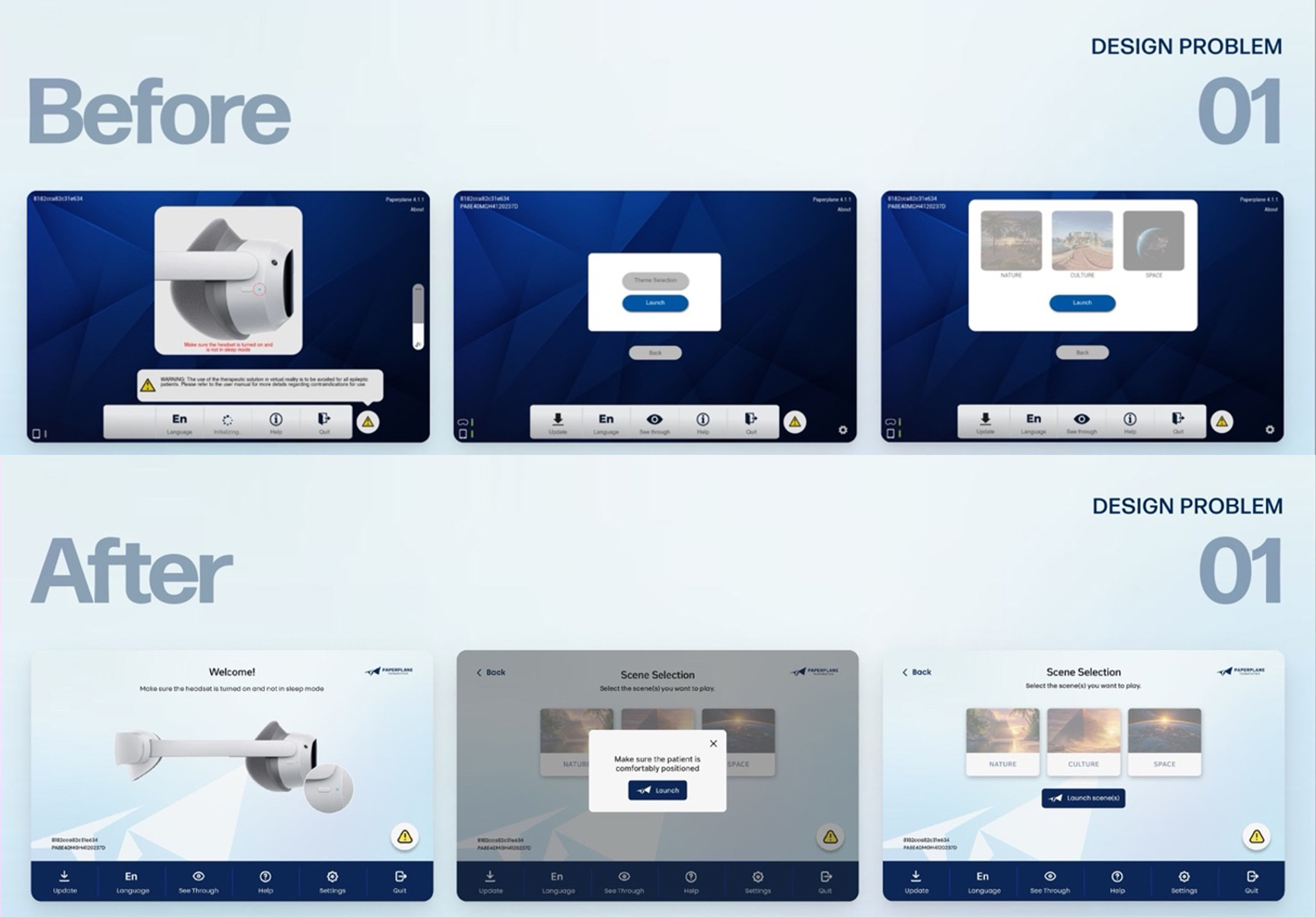
Paperplane Therapeutics develops immersive virtual reality tools designed to reduce patient stress and improve healthcare experiences. Selina redesigned a tablet-based control system used by dentists to operate a VR platform during treatment, conducting user research and testing to streamline workflows, improve ease of learning, and create a more intuitive experience for clinical users.
Design Activities: User research, interaction design, usability testing, prototyping
Building a Brand for Climate Innovation
Halitra × Priyanka Poulose (MDes, 2024)
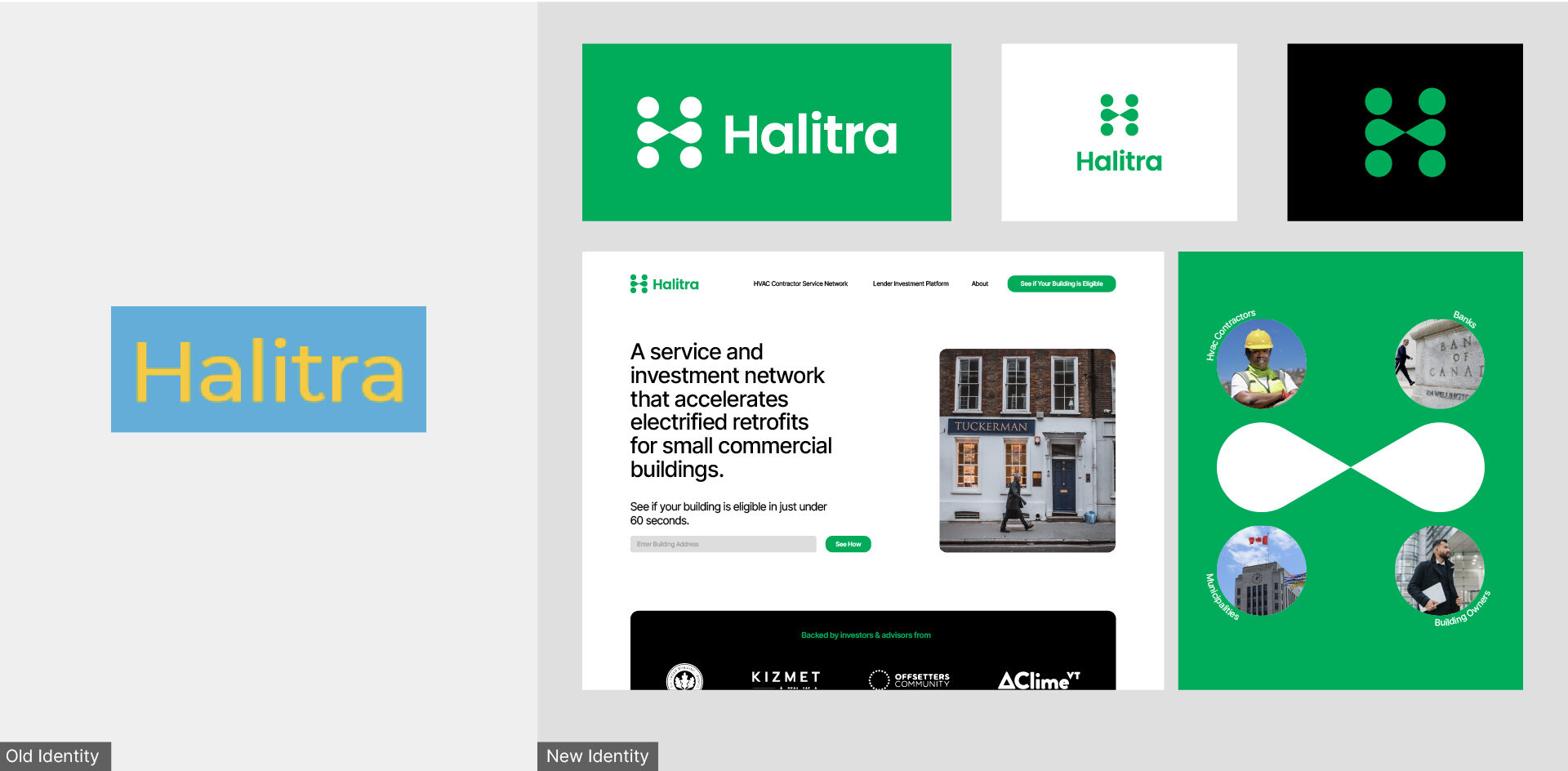
Halitra is a platform that helps commercial building owners identify and finance energy-efficiency improvements, accelerating the adoption of clean technologies. Working closely with the founding team, Priyanka led the development of a complete visual identity system, creating a brand foundation that translated a complex technical offering into a clear and compelling story for customers, investors, and industry stakeholders.
Design Activities: Brand strategy, visual identity development, communication design, design systems
Simplifying Complex Aviation Operations
Airble × Cailine Keirstead (BDes, 2024)
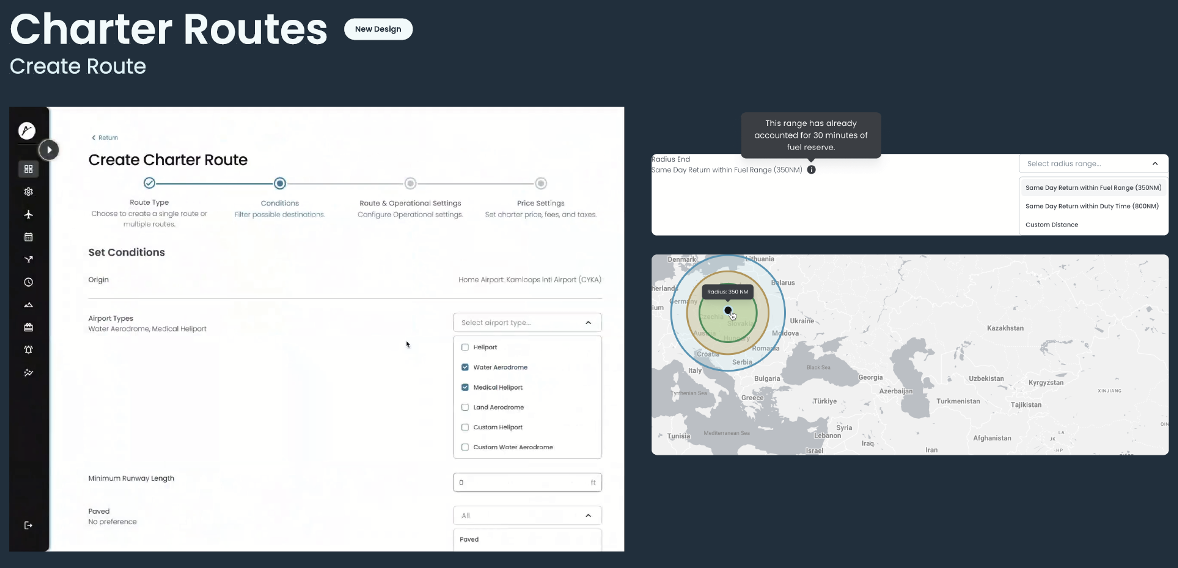
Airble is a charter aviation marketplace that connects passengers with private and shared flight experiences while supporting operators through a digital scheduling platform. Cailine worked with Airble to integrate Transport Canada’s updated crew fatigue management regulations into its platform, designing dashboard experiences that simplified scheduling workflows, improved information architecture, and helped operators manage complex operational requirements with confidence.
Design Activities: User research, information architecture, dashboard design, data visualization, prototyping
Company Application Process
Submit an Application
To participate in Design for Startups, please complete our short application form and tell us about your company, the design challenge you’re facing, and the type of support you’re looking for.
Interview & Scope Refinement
Shortlisted companies will be invited to a conversation with our faculty lead and program team to discuss and refine the project scope.
Company Selection
We select up to 10 partner companies per cohort and notify successful applicants for each cohort at least one month prior to the cohort start date.
Onboarding & Program Kickoff
Selected companies will be onboarded to the program at least two weeks prior to the kickoff and will meet with their student-designer through a virtual kickoff meeting for the entire cohort.
Next Intake: Fall 2026 Cohort (Sep 17 – Dec 10)
Extended deadline: July 30, 2026
Frequently Asked Questions
- How are student-designers selected?
Emily Carr University manages all student matching internally. We review portfolios, skills, interests, communication styles, and project requirements to identify the strongest match for your design challenge - Is Design for Startups an internship, and can we select the student-designer?
No, D4S is not an internship program, it is a faculty-supported design engagement focused on a scoped design challenge over a 12-week period. Student matching is fully managed by our faculty and program team, who pair each company with a student-designer whose skills and experience best align with the project scope and desired outcomes. Since 2013, we have successfully facilitated more than 150 student–company matches - How many student-designers will we work with?
Each company in the cohort is paired with one dedicated student-designer - Are we expected to implement the designs during the program?
Companies are not expected to write code or implement designs during the engagement. The focus is on research, design exploration, testing, and recommendations - How much time is required from our team?
We recommend one primary company contact who can dedicate approximately 4–6 hours per week for meetings, feedback, and collaboration - What events are companies expected to attend?
Companies are expected to attend:
Program Kickoff (September 17, 2026)
Final Showcase Presentation (December 10, 2026)
- How much funding does IRAP provide?
Design for Startups is supported by the National Research Council of Canada Industrial Research Assistance Program (NRC IRAP). Eligible companies contribute a subsidized participation fee of $2,400 + GST - Can companies outside of Vancouver participate?
The program can be delivered virtually and welcomes companies from across Canada - What happens if our priorities shift during the program?
We understand that startups move quickly. Luckily, design research is a very iterative process! While projects should remain aligned with the original design challenge, there is flexibility to refine the scope as new information emerges throughout the engagement
Still Have Questions?
- Please direct any program-related questions to the Program Manager, Priyanka Poulose at shumka@ecuad.ca
- Please direct any IRAP-related eligibility questions to the IRAP ITA Representatives, Dusanka Firaunovic at Firaunovic@nrc-cnrc.gc.ca and Anja Haman at Anja.Haman@nrc-cnrc.gc.ca