

Design for Startups
Spring 2027 Applications are Now Open.
For Companies
Turn a Business Challenge into a Design Project.
Design for Startups connects Canadian companies with senior Emily Carr student-designers for a 12-week, faculty-supported collaboration focused on a defined business challenge.
Using a human-centred design process, student-designers help companies better understand their users, investigate areas of friction, explore new opportunities, and test potential approaches before making larger investments. Design can help companies better understand their users, identify opportunities for growth, improve products and services, communicate more effectively, and make more informed decisions.
Good design drives growth: companies that excel at it see revenue growth 32% higher than their peers over a five-year period, according to McKinsey. Through research, prototyping and iterative testing, design reduces uncertainty and help companies develop products and services that respond to genuine user needs.
What Types of Design Challenges Are a Good Fit?
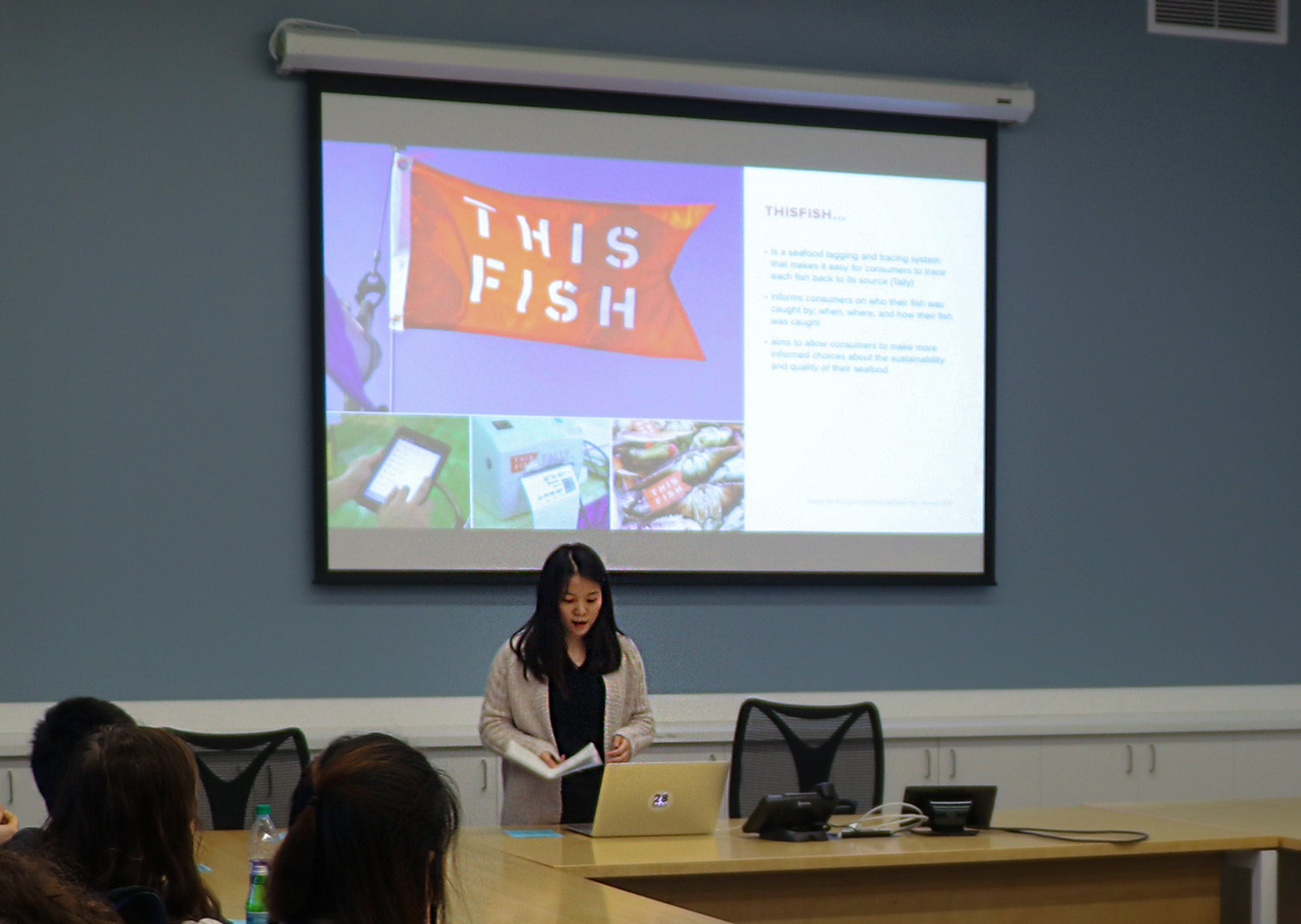
Successful Design for Startups projects begin with a clearly defined business challenge rather than a predetermined solution. Companies may come to the program with questions such as:
- Why are customers dropping off? What do our users need that we are not currently addressing?
- Where are users experiencing friction?
- How could we improve the usability or accessibility of our product?
- Which ideas should we prioritize? How can we test a concept before investing in its development?
- How can we communicate our product or service more clearly?
- How can we make complex information easier for customers to understand?
Each project is refined with the program team to ensure that its scope is appropriate for a 12-week student collaboration.
Is Design for Startups a Good Fit for Your Company?
Design for Startups is best suited to early-to-mid-stage startups and SMEs that:
- have a working prototype, MVP, product or established service;
- can identify a clear user group or target audience;
- have a defined business challenge that can be meaningfully explored within 12 weeks;
- can provide sufficient product, customer or organizational context to support design research; and
- are open to investigating the challenge rather than prescribing a specific solution.
These points reflect the program’s actual fit criteria: stage of development, a clear and user-focused challenge, and a scope appropriate for a 12-week engagement.

What Does a Participating Company Receive?
Each company is matched with one competitively selected senior undergraduate or graduate student-designer whose expertise aligns with the project scope. Student-designers lead their projects with structured support from Emily Carr faculty and peers. Companies also receive a final presentation and project documentation summarizing the work completed.
Depending on the agreed project scope, outputs may also include:
- user research findings and insights;
- design concepts and recommendations;
- prototypes;
- usability testing findings;
- communication or visual design materials; or
- product, service, or experience design frameworks.
Specific deliverables are established during the project scoping process.
What Does Participation Require?
The strongest projects involve active collaboration between the company and student-designer. Participating companies are expected to:
- identify a primary company contact;
- meet with the student-designer regularly and provide timely feedback;
- provide access to relevant product, company and user context;
- involve the student-designer in relevant meetings where appropriate;
- remain open to research, iteration and testing; and
- participate in the program kickoff and final showcase.
Program Eligibility
To participate, companies must:
- Be incorporated in Canada
- Be assigned an IRAP Industrial Technology Advisor (ITA)
The program is hybrid and open to companies across Canada; participation is not limited by region. Final eligibility is determined by NRC-IRAP and may include additional criteria beyond those listed here.
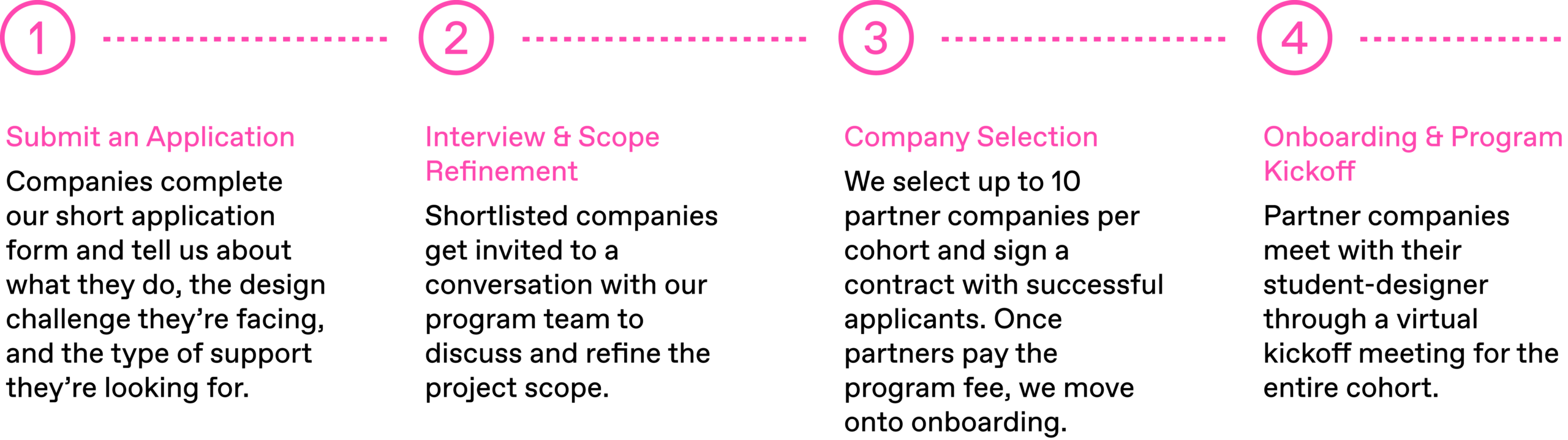
Company Application Process
Recent Project Examples
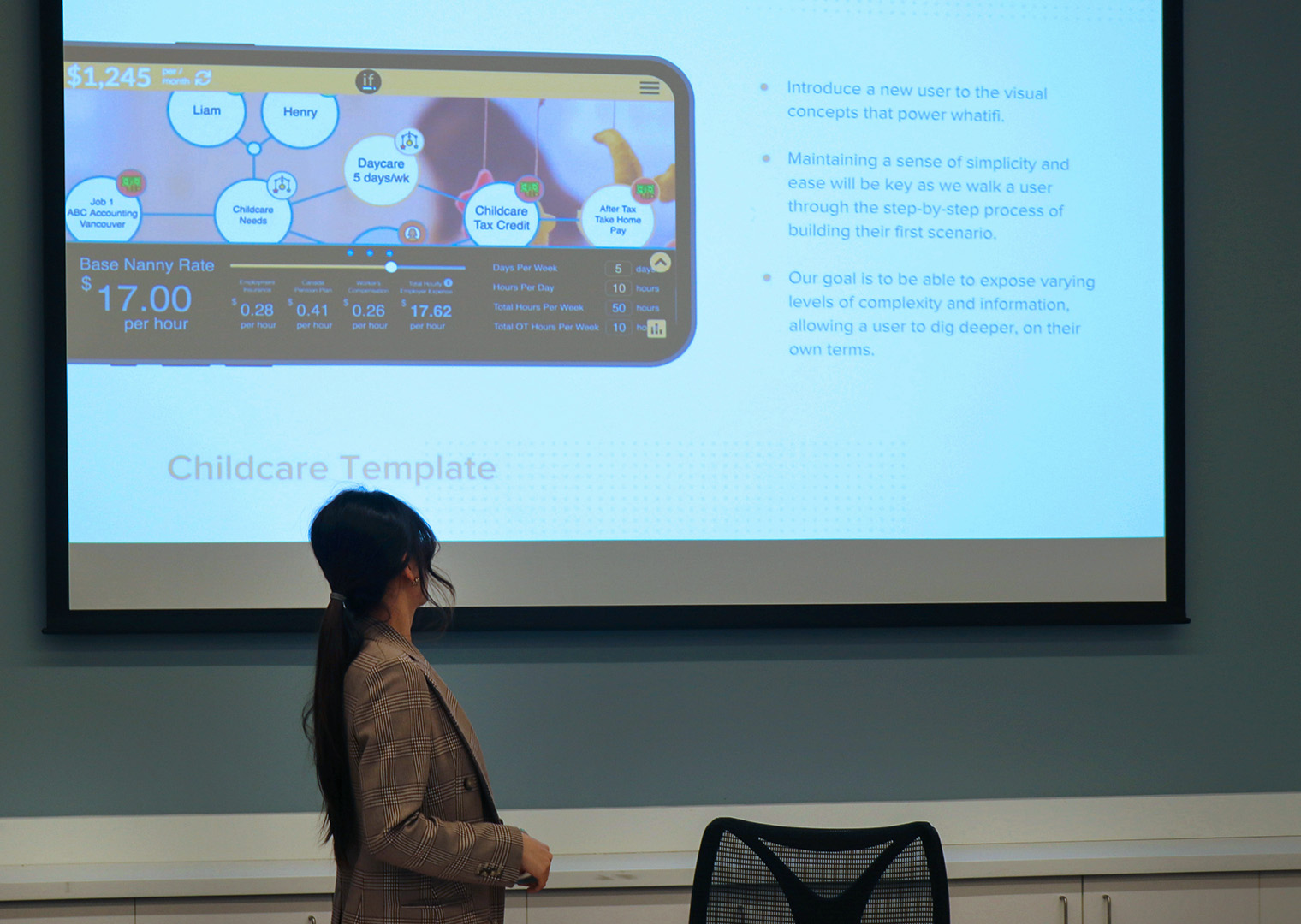
Every Design for Startups project begins with a unique challenge. Explore how past companies have collaborated with our student-designers to advance their products, services, and customer experiences.
➡ Designing Better Healthcare Experiences with AI for Autochart.ai
➡ Improving Digital Therapeutics Through User-Centred Design for Paperplane Therapeutics
➡ Developing a Brand Identity for Halitra’s Climate Technology Platform
➡ Simplifying Complex Aviation Operations for Airble
➡ Creating a Scalable Design System for Accessible Patient Communication for RxPx / Curatio
“We were very satisfied with the Design for Startups program at Emily Carr. The collaboration brought real value to our product and the designer we worked with delivered thoughtful, high-quality work. We’d absolutely recommend the program to any startup with design needs.”
– Paperplane Therapeutics, D4S Spring 2025 Cohort
Company FAQs
What’s the difference between an internship and a Design for Startups placement?
An internship typically places a student within a company to gain broad workplace experience while contributing to its ongoing activities. Design for Startups is a structured, project-based collaboration focused on a specific business challenge.
Over 12 weeks, a student-designer works with the company on an agreed scope and set of deliverables, with support from program faculty through weekly lab sessions. The student is not intended to fill a general staffing need or take on day-to-day operational work; their role is to apply a human-centred design process to research, explore and prototype potential responses to the defined challenge.
Can we choose our student-designer?
D4S faculty match each company with a student-designer based on the project scope, the skills required and the student’s areas of expertise. Companies can identify any specific needs or considerations during the scoping process, but they do not select directly from the student pool. This matching process helps ensure that placements are equitable and that each student is well suited to the proposed challenge.
How many student-designers will we work with?
Each company is paired with one dedicated student-designer for the duration of the program.
Do we need to implement the designs during the program?
No. The program focuses on research, design exploration, prototyping, and recommendations. Implementation can happen after the engagement.
How much time should our team commit?
We recommend one primary company contact who can dedicate approximately 4–6 hours per week for meetings, feedback, and collaboration.
Are there any mandatory program events?
Yes. Companies are expected to attend two virtual meetings:
- Program Kickoff: Mid September/January for Fall/Spring Cohorts
- Final Showcase: Mid December/April for Fall/Spring Cohorts
Exact dates will be provided during company interviews.
What does the program cost?
Eligible companies contribute a subsidized participation fee of $2,400 + GST. The remainder of the costs are funded through the National Research Council of Canada Industrial Research Assistance Program (NRC IRAP) for Fall 2026 – Spring 2028.
Can companies outside of Vancouver participate?
Yes. D4S is delivered in a hybrid format and welcomes eligible companies from across Canada.
What if our priorities change during the program?
Startups evolve quickly, and projects can adapt as new insights emerge. We work with companies to refine the project scope while keeping it aligned with the original design challenge.